ATI College and Curtin Malaysia cash in as Australia tightens student visa rules
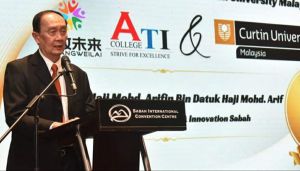
Wong Khen Thau, ATI’s executive chairman
Although they didn’t plan it that way, Australia’s tightening of student’s visa rules to weed out job seekers and migrants is a blessing to ATI College and Curtin University Malaysia. Last month, both signed a collaboration agreement to launch a one-year master degree course in international business. The first intake of 40 students mostly from China is expected in July. The next in February. This collaboration has brought Malaysia into focus as a centre of good and relatively cheap higher education. And this has prompted ATI College to change its tagline to “Now everyone can study”.
After almost 60 years of failure, Sabah tries again to achieve self-sufficiency in rice
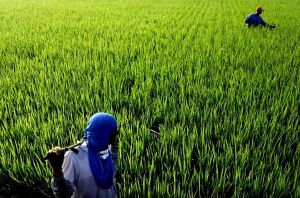
A paddy field: Sabah struggles to be self-sufficient in rice
Rice is big business. But this realisation seems to have dawned on Sabah politicians rather belatedly. The east Malaysian state spends about a billion ringgit a year on imported rice to meet almost all its consumption as self-sufficiency in the food crop has dropped to a dangerous 22 per cent. Sabah imports most of its rice from Thailand, Vietnam, China, Pakistan and India. In almost 60 years, it has never met its 60 per cent self-sufficiency target first set in 1965 with the setting up of the Sabah Padi Board which was later mired in allegations of corruption and mismanagement. It was wound up in 1981 after chalking up massive losses and debts. Now the Sabah government is reviving it to do what it had failed to do.
Three girls beat the odds in their tourism studies to come up on top
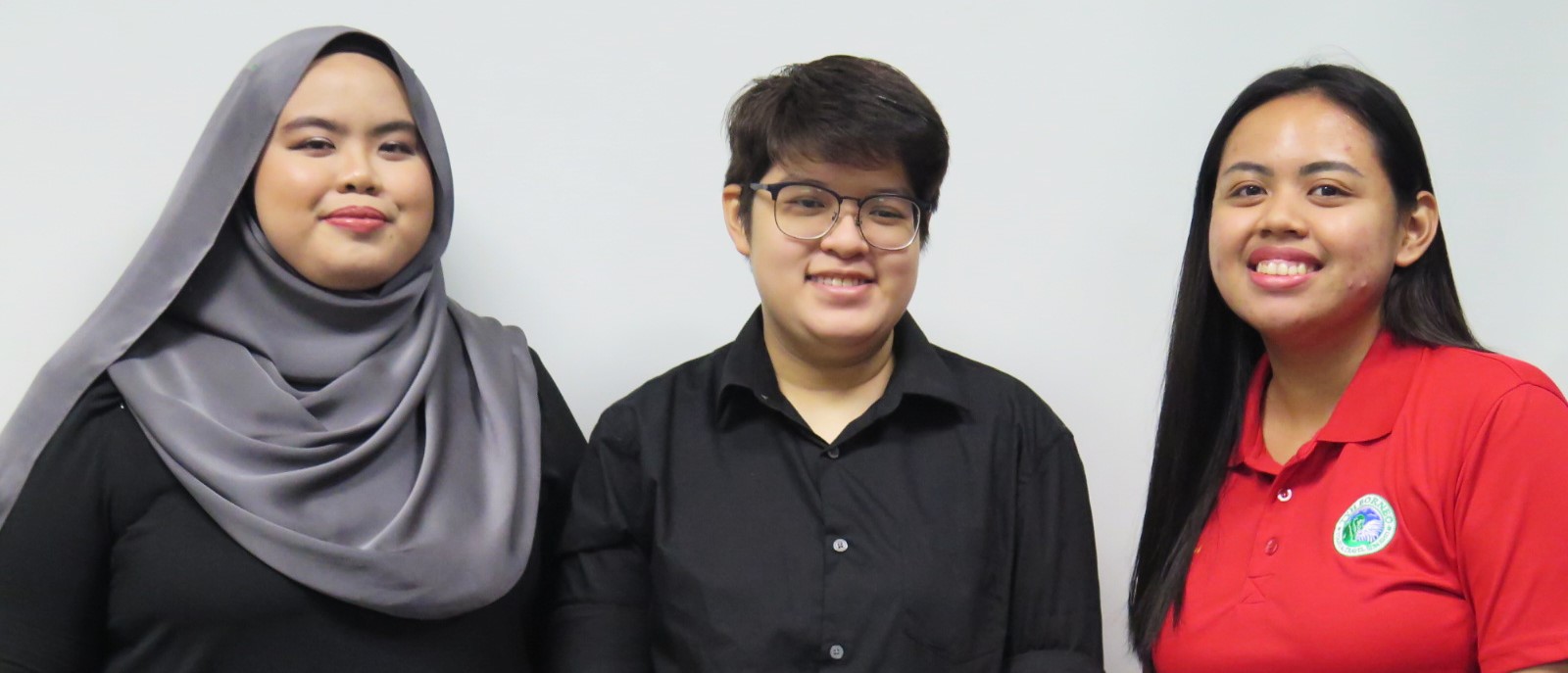
ATI College’s top students: from left to right: Iman Maryam, Melissa Wong and Nurul Syahanah.
School leavers are at a crossroad when it comes to choosing their careers. Many would take the traditional path: study law, accountancy, medicine, dentistry, engineering or architecture. Some would be happy just to grab the first job that comes along after obtaining their Sijil Pelajaran Malaysia (school leaving certificate). But ATI College’s top students Iman Maryam, Melissa Mercedes Wong Thien Eng and Nurul Syahanah binti Annuar have taken the road less travelled and proven themselves right in choosing tourism. It is Sabah’s fourth most important industry contributing about 10 per cent to its gross domestic product (GDP). Tourism earned the state RM13b last year and employs 430,000 people, about a fifth of Sabah’s 1.9m workforce. The hotel and food and beverage industry employs 193,000 people, about half of all tourism employees.
After 10 years, a grandiose playground for the super-rich remains in limbo
An artist’s impression of the Tanjung Aru Eco Development project.
Hajiji Noor
It was to have rivaled Bali. But Sabah’s grandiose multi-billion-ringgit playground for the super-rich at Tanjung Aru beach never took off. The two-km long beach is reputed to be one of the world’s best offering spectacular sunrise and sunset. Launched by former chief minister Musa Aman in 2013 during a ground-breaking ceremony, the project has stalled because of objections from the public and environmentalists over a massive land reclamation plan, sales of the reclaimed land, and doubts over public access to the beach. And after 10 years, the project remains in limbo as the vagaries of politics have dampened investors’ interest. Now chief minister Hajiji Noor has given the Tanjung Aru Eco Development (TAED) which would have then cost RM7.1 billion a glimmer of hope.
Founder says ATI College owes its success to former tourism minister Bernard Dompok
Wong Khen Thau (left) and Bernard Dompok
It was a poignant moment for Wong Khen Thau, the founder of ATI College at its 26th convocation on February 29 at the Magellan Sutera Resort in Kota Kinabalu. Twenty-eight years ago, the hotel industry didn’t think much of his tourism school founded in 1996 which was offering short courses in food and beverage, housekeeping and front office operations. But one man had faith in him: Bernard Dompok, then Sabah tourism minister. His instinct as a trained property valuer told him Mr Wong would succeed. He despatched the first batch of 40 government sponsored students to the Asian Tourism Institute as it was then known. From that small start, the ATI College has produced more than 12,000 skilled workers for the hotel industry.
Environmentalists scramble for answers as a post mortem is inconclusive
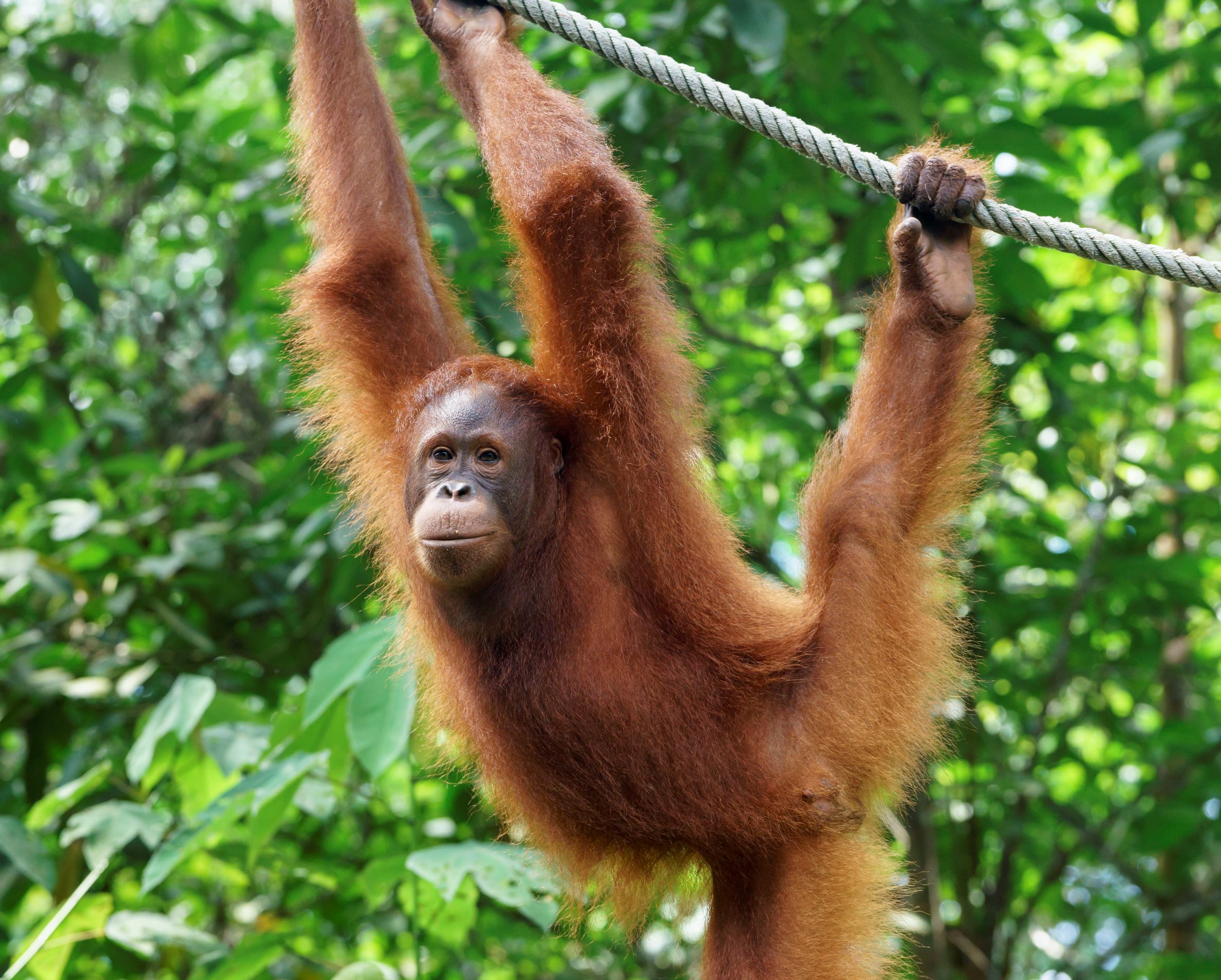
An orangutan, man’s second closest cousin.
A dead male orangutan found floating on the Kinabatangan river in northeast Sabah last week has sent environmentalists scrambling for answers as a post-mortem failed to find the cause of his death. The autopsy performed by a veterinarian at the Danau Girang Field Centre as soon as the orangutan was found has ruled out foul play saying there were no gunshot wounds in the 10-year-old primate’s body. The DGFC run by Sabah Wildlife Department and Britain’s Cardiff University studies wildlife. No bones were broken. Neither were there any signs of an attack except for a bruise in the neck that could have been caused by a fall from a tree into the river, according to Christina Liew, minister of tourism, culture and environment. Augustine Tuuga, Sabah wildlife director, said the orangutan might have drowned. These arboreal anthropoid apes can’t swim. Yet the post-mortem didn’t say that the orangutan drowned. His organs are said to be healthy. Ms Liew said the orangutan’s heart, lungs, kidney, gallbladder and liver would be sent to a laboratory for further investigation.
Mount Trusmadi poses a formidable challenge to Mount Kinabalu
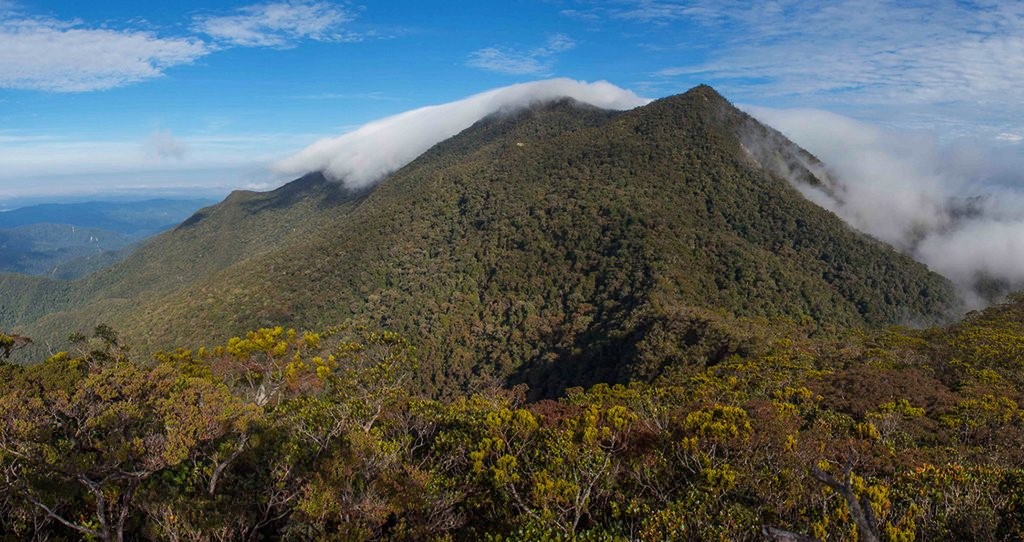
Mount Trusmadi in the heart of Sabah.
Sabah is launching the Mount Trusmadi International Climbathon on May 25 as mountain races make a comeback after a six-year hiatus. It is Malaysia’s second tallest mountain after Mount Kinabalu (4,095m) that sits deep in the jungle of the interior of the north Borneo island state. It stands at 2,642m, about two-thirds the height of Mount Kinabalu whose climbathon was scrapped in 2018 after a 30-year run. The Trusmadi race is said to be even tougher than Kinabalu’s which is reputed to be the world’s toughest mountain race. And the Mount Kinabalu International Climbathon is making a comeback this year. No date has been fixed but it is expected in October as it had been in the past.
Will chartered flights from China augur well for east coast tourism
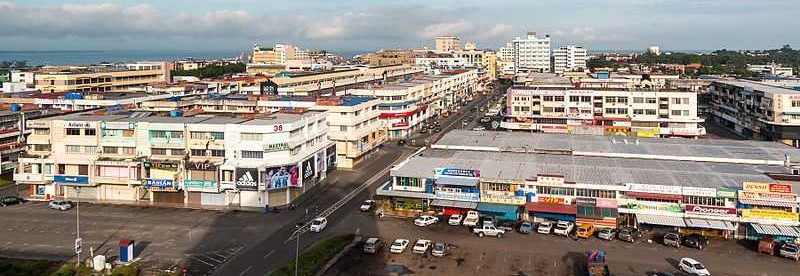
Tawau town
Getting airlines to fly tourists from China to Tawau, the east coast agricultural town, has been a struggle. Previous attempts to set up direct flights between Chinese cities and Tawau have come to nought. So Christina Liew, Sabah’s minister of tourism, culture and environment, was understandably elated when the inaugural chartered flight carrying 157 Chinese tourists from Nanjing in eastern China touched down at Tawau airport on January 23. “I am excited that this new route will contribute to the growth and development of Tawau as a prominent international destination,” she said. But her optimism may be premature.
Sabin Samitah’s job may be hampered as state election looms
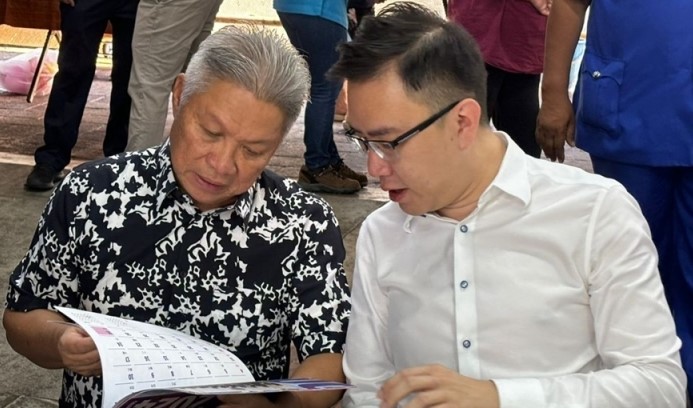
Kota Kinabalu mayor Sabin Samitah (left) with Luyang lawmaker Ginger Phoong Jin Zhe – Picture courtesy of The Borneo Post
Seven years ago, the name Sabin Samitah struck fear in Malaysia’s corporate world. As chief executive officer of the Inland Revenue Board, he slapped companies and businessmen with multi-million-ringgit income tax bills and penalties for under declaring income as soon as he assumed office in December 2016. Among those he cracked down were the companies of former prime minister Mahathir Mohamed’s three sons, and property developer Lee Kim Yew, a close friend of Mahathir, who founded Country Heights Holdings Berhad. Then in October 2021, two months short of his five-year contract, he abruptly quit his job. In September that year he had slapped former prime minister Najib Razak with a RM1.7-billion tax bill which drew condemnations from Mr Najib who is serving a 12-year jail sentence for corruption and money laundering. The Ranau-born Mr Sabin, 63, has now become the seventh mayor of Kota Kinabalu. His appointment on new year’s day was understandably greeted with trepidation by those who know him. Yet he hasn’t said that he would go after ratepayers who owe the Dewan Bandaraya (city hall) about RM50m in council taxes. But he has set his sight on giving the state capital cleaner public toilets in three months.
A record RM13b tourism revenue despite sluggish growth last year
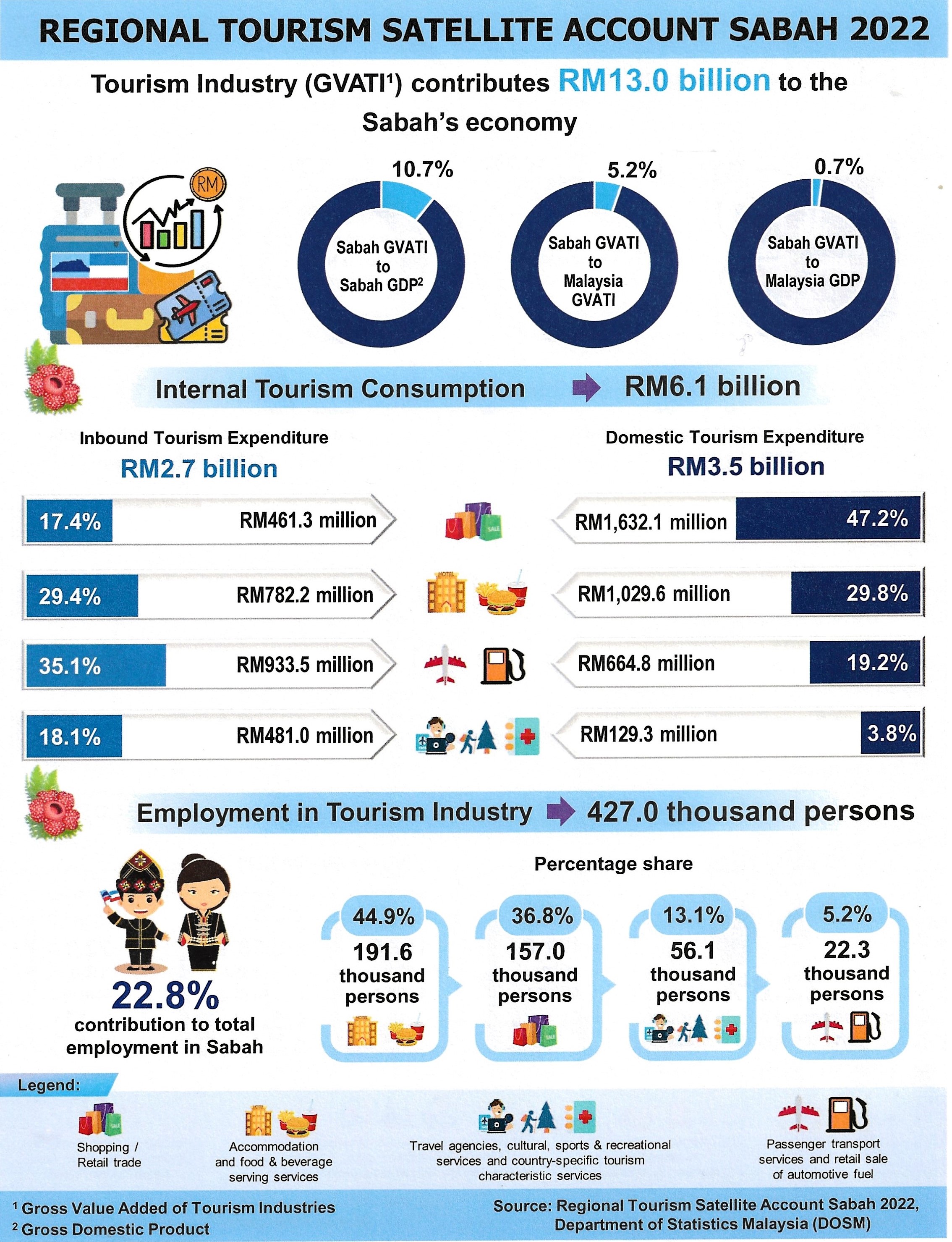
A new method of accounting for tourism has yielded a set of surprising figures. The inaugural Sabah tourism satellite account (TSA) released last week by the Sabah tourism ministry in Kota Kinabalu shows that tourism earned the state an all-time high of RM13b. This is despite a relatively sluggish recovery last year after two years of travel ban because of the Covid-19 pandemic. And it contrasts sharply with the RM9b earned in 2019 when the number of visitors to the state was the highest at 4.2m against a low 1.7m last year. The reason for this “discrepancy” is in the way tourism is defined and measured in the TSA prepared by the Sabah Tourism Board and Malaysia’s Department of Statistics.



 Sabah Insights