Business

Sabah Hospitality Fiesta banks on a lopsided deal

When forgoing a million ringgit profit is an opportunity cost
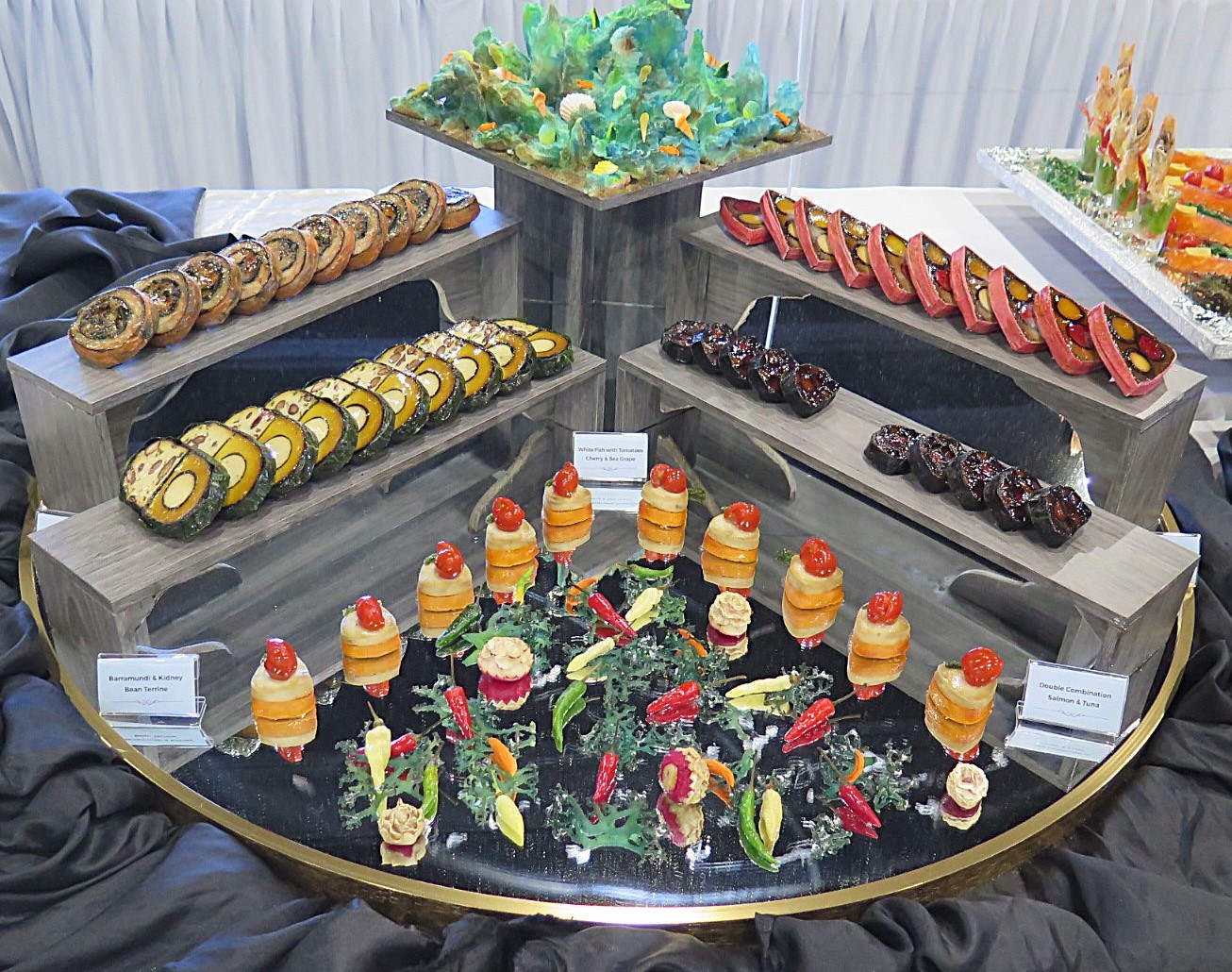
Contestants don’t lack ideas in concocting their best culinary fare.

Trade exhibitions are big money spinners. And so, it surprises that the Sabah and Labuan Chapter of the Malaysian Association of Hotels and ATI College have given up staging their very successful food and beverage exhibition which they launched just last year to Informa Markets, a British firm reputed to be one of the leading organisers of exhibitions. Instead, they have partnered Informa in what looks like a lopsided deal to host the “trade-only” Food and Hospitality Malaysia, Borneo Edition, a very much smaller version of its FHM expo in Kuala Lumpur that brings sellers and buyers together. And in the process MAH-SLC and ATI College handed to Informa about RM1m ($235,000) in profit for hosting the three-day FHM, Borneo Edition, from September 26 to 28 at the Sabah International Convention Centre in Kota Kinabalu. Both MAH-SLC and ATI College have gained nothing more than the free use of one of the three exhibition halls from Informa for their popular Sabah Hospitality Fiesta which is in its 24th year.

Continue reading “Sabah Hospitality Fiesta banks on a lopsided deal”
Business

Reviving a failed paddy board

After almost 60 years of failure, Sabah tries again to achieve self-sufficiency in rice

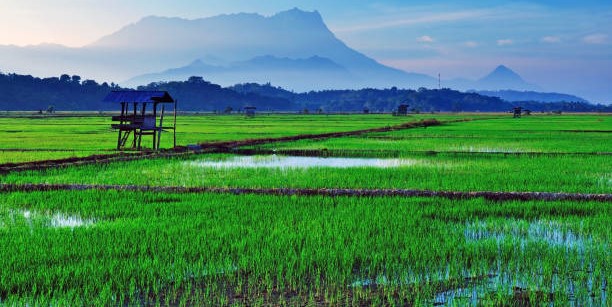
A paddy field: Sabah struggles to be self-sufficient in rice

Rice is big business. But this realisation seems to have dawned on Sabah politicians rather belatedly. The east Malaysian state spends about a billion ringgit a year on imported rice to meet almost all its consumption as self-sufficiency in the food crop has dropped to a dangerous 22 per cent. Sabah imports most of its rice from  Thailand, Vietnam, China, Pakistan and India. In almost 60 years, it has never met its 60 per cent  self-sufficiency target first set in 1965 with the setting up of the Sabah Padi Board which was later mired in allegations of corruption and mismanagement. It was wound up in 1981 after chalking up massive losses and debts. Now the Sabah government is reviving it to do what it had failed to do.

Continue reading “Reviving a failed paddy board”
Business

Hajiji’s TAED dilemma

After 10 years, a grandiose playground for the super-rich remains in limbo

An artist’s impression of the Tanjung Aru Eco Development project.
Hajiji Noor

It was to have rivaled Bali. But Sabah’s grandiose multi-billion-ringgit playground for the super-rich at Tanjung Aru beach never took off. The two-km long beach is reputed to be one of the world’s best offering spectacular sunrise and sunset. Launched by former chief minister Musa Aman in 2013 during a ground-breaking ceremony, the project has stalled because of objections from the public and environmentalists over a massive land reclamation plan, sales of the reclaimed land, and doubts over public access to the beach. And after 10 years, the project remains in limbo as the vagaries of politics have dampened investors’ interest. Now chief minister Hajiji Noor has given the Tanjung Aru Eco Development (TAED) which would have then cost RM7.1 billion a glimmer of hope.

Continue reading “Hajiji’s TAED dilemma”
Business

The rice fiasco

As prices skyrocket, Sabah aims to end Bernas’ rice monopoly

Paddy fields are few and far between.

Rice isn’t only a staple of Sabah’s indigenous Kadazandusuns. It is sacred to them. Legends have it that its Bambarayon spirit has given them a lifeline. So in a sense, they should be self-sufficient in rice. A Kadazandusun family would have a paddy field and be confident of a good harvest that would give them rice to last for at least a year or until the next harvest. Surplus rice would be stockpiled or given to those who didn’t have any. Not anymore. Paddy acreage and rice production have shrunk so drastically that Sabah has to import almost all of its consumption.

Continue reading “The rice fiasco”