
Stateless Bajaus Laut remain discriminated as the Borneo state celebrates their culture
It is ironic that the culture of a small group of stateless people has become an integral part of Sabah’s heritage and is celebrated with much pageantry every year. The annual Regatta Lepa, a colourful boat race, of the Bajau Laut or sea gypsies will be staged for two days from November 23 for the 29th time in the southeastern idyllic resort town of Semporna. Yet these nomads, about a few thousands of them, are discriminated and denied Malaysian citizenship. And it begs the question why they remain stateless while their culture has become Malaysian.
Any hope that the Sabah government will help the Bajau Laut become Malaysians are dashed by Joniston Bangkuai, the assistant state minister of tourism, culture and environment. Flippantly, he refered to them as “citizens of the world” at a press conference in Kota Kinabalu last week to announce the regatta dates, saying they can be anywhere in the world. Really?
His assertion that they should not be discriminated as “they have the right to be in Semporna because they have been there for years” rings hollow. In June, hundreds of Bajau Laut were evicted from their homes by Sabah Parks which comes under Mr Bangkuai’s ministry. According to Singapore’s ISEAS-Yusof Ishak Institute, 273 wooden stilt houses belonging to the Bajau Laut were torn down and burnt to make way for a RM478m township.
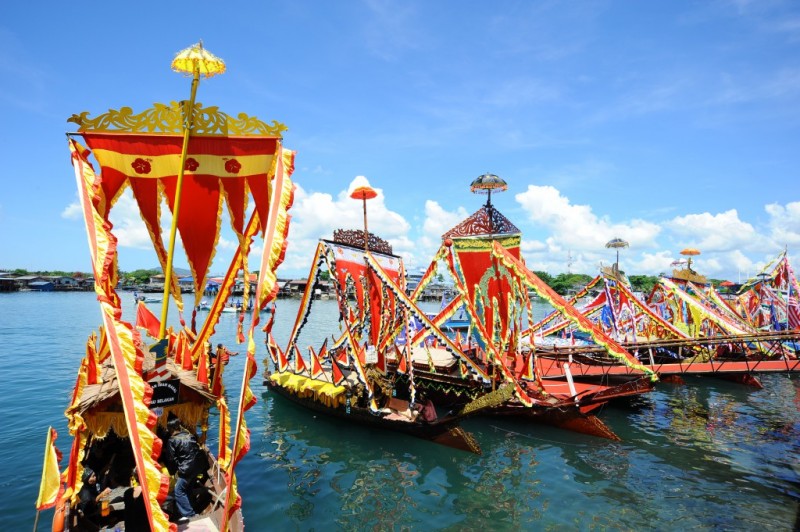
Yet Sabah continues to cash in on their culture. The Regatta Lepa is a grand tourism event which according to Mr Bangkuai is expected to draw 15,000 tourists to Semporna, the gateway to world famous diving sites such as Sipadan. During the celebration, the Bajau Laut will parade their colourfully decorated lepas (boats). The highlight is the lepa race. There is a beauty contest in which young women are judged not just by their beauty but their colourful traditional costumes. And lots of dancing and singing to the beat of their traditional music.
Like their Bajau and Suluk cousins they should have been Malaysians and treated as natives because they were born in Sabah. Point 10 of the 20-point agreement to form Malaysia in 1963 states that a person born in North Borneo, the old name of Sabah, after Malaysia shall be a federal citizen and that his citizenship should not be tied to his parents’. But this constitutional provision is no more; and citizenship is now tied to their parents’. Recent changes to citizenship laws have made it even harder not only for the Bajau Laut but about 500,000 stateless indigenous Kadazan-Dusuns and Muruts and other races to become Malaysians.
The nomadic life of the Bajau Laut has also complicated matters. Like their 15th century Filipino ancestors, they ply the Sulu sea between the Southern Philippines and the southeastern coast of Sabah in search of a living as fishermen. However they claim affinity with Sabah as most of them are born in waters off Semporna. But they don’t have any papers to prove their birth and their parents’ citizenship.

 Sabah Insights