
And Hajiji Noor fails to defend Sabah’s rights

It is shocking that the federal government has refused to give Sabah a RM866m electricity subsidy to prevent a statewide blackout next year. The money is needed to pay for rental of diesel generating sets and diesel fuel to produce electricity while the Tenom-Pangi hydro plant is shut down for repairs. Even more shocking is that the Sabah government appealed to the federal treasury for the money. In this, both prime minister Anwar Ibrahim and chief minister Hajiji Noor have erred. Mr Hajiji should not have begged. He should have demanded for it as under the Malaysia Agreement of 1963, Putra Jaya has a constitutional duty to fund Sabah’s development which includes financing Sabah electrification. Mr Anwar has conveniently forgotten that his government owes Sabah hundreds of billions of ringgit in the 40 percent net revenue it collected from the resource-rich north Borneo island state which Sabah is constitutionally entitled. And while Mr Anwar has reneged on the MA63 and held Sabah to ransom, Mr Hajiji has shown how subservient he is to the central government and that he can’t be relied on to defend Sabah’s rights.
It was only early this year that Mr Hajiji announced in the state legislature with much fanfare that Sabah has, after 40 years, regained regulatory control over power supply from the federal government. He described the move as historic.

But those were empty years. Former chief minister Harris Salleh had hoped that federal money would give all of Sabah efficient power supply when he handed the Sabah Electricity Board to the federal government. But it was not to be. Putra Jaya made a mess of it and in 1998 privatised SEB which was renamed Sabah Electricity Sendirian Berhad. Tenaga Nasional Berhad, Malaysia’s largest federally-owned electricity company, acquired 80 percent of SESB. The Sabah government took the rest.
Yet nothing has changed. SESB has been losing about RM100m ($25m) a year since the federal government contracted independent power producers to supply electricity to Sabah. Electricity is bought at 43 sen a kilowatt-hour from IPPs and sold to Sabah consumers at 34 sen – a loss of nine sen. Despite the high purchasing cost, power supply remained erratic with frequent disruptions. Former chief minister Shafie Apdal questioned why Sabah which has the most IPPs (12 of them) still suffers from power outages. He leads the opposition Warisan party.
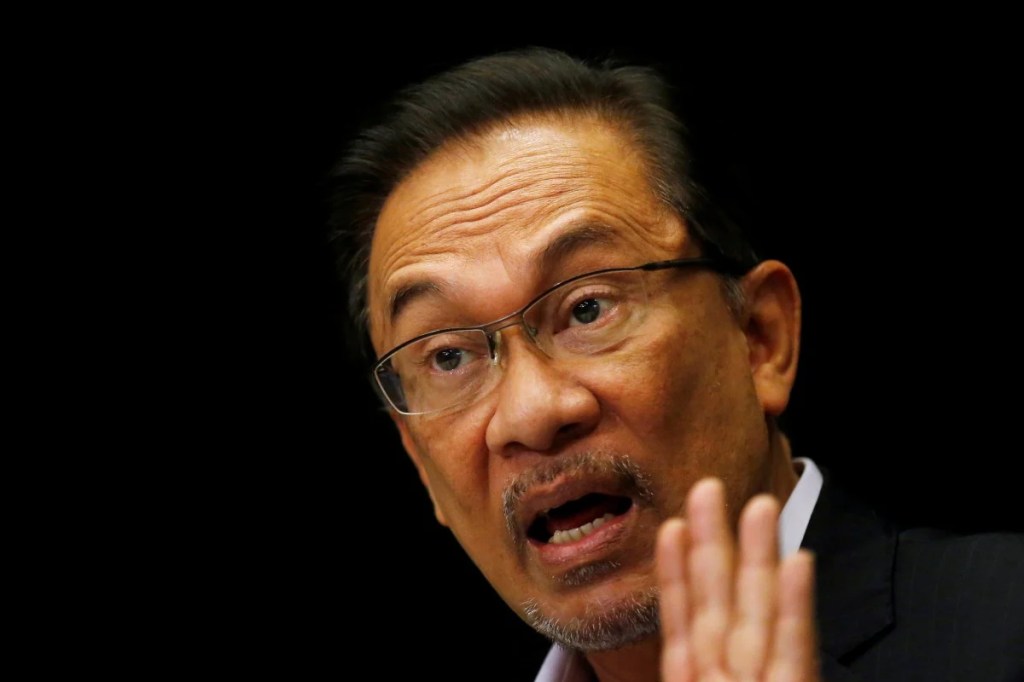
Mr Anwar is undoubtedly delighted to have Sabah take control of Sabah power supply. He has one less burden, so he thinks. He has quickly announced that federal subsidies at about RM600m a year for SESB will end in 2030 without coming up with an alternative funding for Sabah electrification programme. Only 98% of Sabah’s 3.5m people have electricity supply. Many villagers in remote areas are still relying on oil lamps and tiny generators for lighting after 61 years of Malaysia. And electrification of Sabah won’t be complete until 2030 according to government plans.
With regulatory powers over the state electricity supply, Sabah has been toying with the idea of taking over the loss-making SESB. It is saddled with a massive RM2bn debt owed to TNB, its biggest shareholder and parent company. The rationale, according to SESB chairman Wilfred Madius Tangau, is that Sabah will be able to generate electricity sufficiently and efficiently on its own instead of relying on IPPs which account for 80 percent of the state’s power supply. He based his confidence on the success of Sarawak Energy Berhad which generates all power supply of neighbouring Sarawak.

Mr Hajiji thinks it’s incumbent on his government to take over SESB from the federal government once its subsidies end. But turning around SESB is a herculean task. Notwithstanding its debts, Mr Hajij reckons buying over IPPs may cost billions of ringgit. But why must Sabah assume SESB debts when cash-rich TNB is its biggest shareholder. And why isn’t TNB funding SESB? TNB chalked up RM2.16bn net profit for the first half of this year on revenue of RM14.37bn.
Sabahans are increasingly disenchanted with Mr Hajiji for not standing up to Mr Anwar to defend Sabah’s rights under the MA63. His failure to get the federal government to pay Sabah the hundreds of billions of ringgit of the 40 percent net revenue it owes since Malaysia was formed is gnawing at them. Content with the RM600m interim payment from Putra Jaya, he has portrayed himself as an Anwar’s yes man.
Mr Hajiji leads a fragile coalition government of largely party defectors allowing Mr Anwar to ride roughshod over him. He knows that Anwar can easily engineer a coup against him because Sabah politicians are fickle. They are only “loyal” to the party in power and have no qualms to jump ship when the tide turns against them. In 2018 Mr Hajiji wasted no time in quitting the defeated United Malay National Organisation which had afforded him rich ministerial posts and all the trappings of power for 30 years. Umno lost the national election for the first time in 62 years. He defected to Mahathir Mohamad’s winning Bersatu.
For Mr Hajiji, appeasing Mr Anwar to keep his chief minister post is paramount.

 Sabah Insights