
After 10 years, a grandiose playground for the super-rich remains in limbo


It was to have rivaled Bali. But Sabah’s grandiose multi-billion-ringgit playground for the super-rich at Tanjung Aru beach never took off. The two-km long beach is reputed to be one of the world’s best offering spectacular sunrise and sunset. Launched by former chief minister Musa Aman in 2013 during a ground-breaking ceremony, the project has stalled because of objections from the public and environmentalists over a massive land reclamation plan, sales of the reclaimed land, and doubts over public access to the beach. And after 10 years, the project remains in limbo as the vagaries of politics have dampened investors’ interest. Now chief minister Hajiji Noor has given the Tanjung Aru Eco Development (TAED) which would have then cost RM7.1 billion a glimmer of hope.
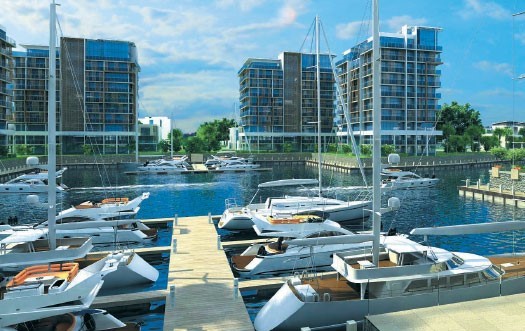
Pandikar Amin, the TAED chairman, has not ruled out the project when he announced late last month that the Sabah government has put the land reclamation of Tanjung Aru beach “on hold”. About 70% of the 350-hectare TAED would have been built on the beach front reclaimed from the sea at a cost then estimated at about RM1.8 billion. Plots of the reclaimed land totalling 1.2m square metres of floor space (about 224 football fields) would have been sold to real-estate developers. The whole project would have six hotels with 1,800 rooms, including a six-star hotel, 5,000 flats, 150 villas, 475 terraced houses, a marina, a 133-hectare 18-hole golf course designed by Greg Norman, a professional Australian golfer, and a man-made rainforest. Mr Pandikar has seemed to suggest that his government would reconsider these once it has won public confidence in the TAED. It was only in December 2022 that TAED gave Handal Borneo Resources Sendirian Berhad, a subsidiary of Kuala Lumpur-based Handal Energy Berhad, a manufacturer of off-shore cranes for the oil and gas industry, a 15-year sand mining concession to reclaim land from the Tanjung Aru sea. TAED has not terminated this agreement with Handal which would have cost it a fortune in compensation.
It now plans to re-develop the Prince Philip Park, built in 1950 and named after the husband of Britian’s Queen Elizabeth the second. The 6.5-hectare park, which has since been ruined by neglect, will be expanded to 12 hectares at a cost of RM20m. On the drawing board is a history centre to recount Sabah’s British colonial history until it helped form Malaysia in 1963. A hotel is planned on a 1.6-hectare site now occupied by food stalls which will move to another site. “When we deal with the park first it will dispel all negative perceptions that might affect the present government,” he told reporters at a press conference in Kota Kinabalu.

That may seem to be wishful thinking as state election looms. It must be held by next December. The TAED had been a thorny issue in the 2018 state election when the opposition Warisan party promised to dump it if it came to power. It did win but failed to abandon the project. And TAED was one of the reasons Warisan lost the snap election it called in 2020 when it was under siege, although its Tanjung Aru lawmaker Junz Wong kept his seat.
In 2013, when Musa Aman launched TAED, he thought he had all his bases covered. After all, it is wholly owned by the Sabah government. And the federal government pledged to give Sabah RM500m to kickstart the project. (But it never got the money). TAED would bring about RM30b of investment and create thousands of jobs. A man-made rainforest, an expanded and refurbished public park with sporting amenities, and a thousand flats for young Sabahans would shield TAED from public criticism and objections. He was wrong. The public didn’t buy all that and were quick to vent their anger at him for taking away their beach. What Musa, who was Sabah’s longest serving chief minister for 15 years, didn’t foresee was that his Barisan Nasional coalition would lose the 2018 election.
And Hajiji now faces the same dilemma.

 Sabah Insights
1 thought on “Hajiji’s TAED dilemma”