
Sabin Samitah’s job may be hampered as state election looms
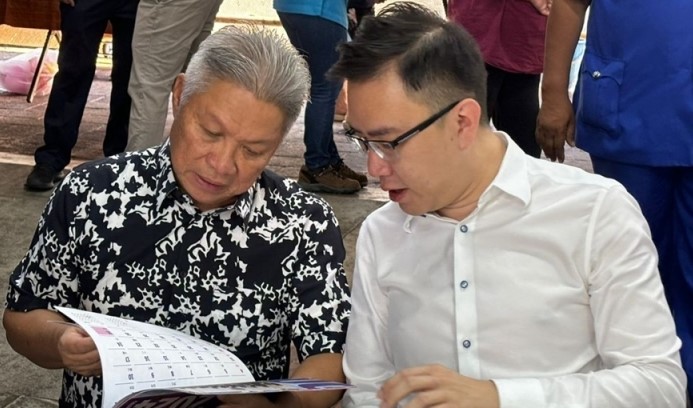
Seven years ago, the name Sabin Samitah struck fear in Malaysia’s corporate world. As chief executive officer of the Inland Revenue Board, he slapped companies and businessmen with multi-million-ringgit income tax bills and penalties for under declaring income as soon as he assumed office in December 2016. Among those he cracked down were the companies of former prime minister Mahathir Mohamed’s three sons, and property developer Lee Kim Yew, a close friend of Mahathir, who founded Country Heights Holdings Berhad. Then in October 2021, two months short of his five-year contract, he abruptly quit his job. In September that year he had slapped former prime minister Najib Razak with a RM1.7-billion tax bill which drew condemnations from Mr Najib who is serving a 12-year jail sentence for corruption and money laundering. The Ranau-born Mr Sabin, 63, has now become the seventh mayor of Kota Kinabalu. His appointment on new year’s day was understandably greeted with trepidation by those who know him. Yet he hasn’t said that he would go after ratepayers who owe the Dewan Bandaraya (city hall) about RM50m in council taxes. But he has set his sight on giving the state capital cleaner public toilets in three months.
Going after ratepayers for arrears is nothing compared to collecting more than RM130 billion of income taxes a year for his country. But it is unclear if Mr Sabin, who served the IRB for more than 30 years, is up to the largely housekeeping task of city hall that ranges from garbage collection to street lighting, public transport, easing traffic jams, providing ample parking, and city planning to make the state capital more liveable. Cash-strapped city hall has to depend on government funds for its operation since it is unable to collect much of the council taxes which are its main source of income. All eyes are on how he will raise the much-needed funds to run city hall.
But other than keeping public toilets clean, Mr Sabin has plans for a centralised public transport system and replacing the scratch-card parking ticket (which has angered motorists) with a digitalised one. In truth, they are not his ideas. Past mayors had toyed with these. But nothing has come out of them. Last year city hall launched a 12-year development plan to turn Kota Kinabalu into a smart city by 2035 by tapping digital technology.
Mr Sabin’s job may be hampered by political expediency as chief minister Hajiji Noor looks likely to call a state election this year although it isn’t due until next. Thus the mayor is unlikely to make politically unpopular decisions such as raising council rates, compelling property owners to repair their rundown buildings or cracking down on council tax defaulters.
He has to be tactful. He can’t antagonise the small traders, hawkers, fishmongers, butchers and vegetable vendors who with their family and relatives form a sizeable block of votes for the Api-Api, Luyang and Likas state constituencies. These seats form the Kota Kinabalu parliamentary constituency. Already Mr Sabin has sent shivers down the spine of Ginger Phoong Jin Zhe, the Luyang lawmaker, and Chan Foong Hin, the Kota Kinabalu member of parliament, who both tried to impress upon him not to ruffle feathers in their seats during a walkabout in Foh Sang town on January 6.
One project which Mr Sabin would like to get his hands on is the city hall’s RM30m six-storey car park in Foh Sanģ which was supposed to have been completed last year. It would have parking space for 320 cars and a market with 92 stalls. Lack of funds has stopped work on it.

 Sabah Insights