
Prohibitive costs deny patients of the best treatment
The mention of cancer invariably conjures up a death sentence. It is Sabah’s fourth leading cause of death. Every year about 1,200 people die of it while about 1,400 new cases are reported. Oncologists (cancer specialists) however say many of these deaths could have been prevented as many cancers are treatable, if not curable, if only they were discovered early. And the latest drugs and state-of-the-art equipment can help patients with advance stage of the disease survive. Top health officials tried hard last month in Kota Kinabalu to paint a rosy picture of Sabah’s cancer care at the 34th Annual Scientific Congress of the Malaysian Oncological Society (Ascomos). Reality however speaks otherwise.
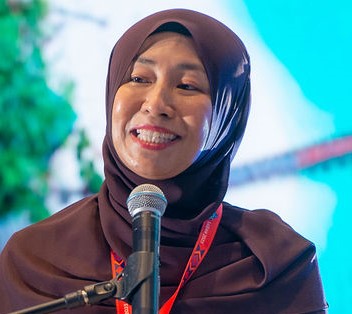
There was no lack of rhetoric at the congress. Dr Ros Suzanna Ahmad Bustaman, the health ministry’s head of oncology, said her ministry ensures “high quality cancer care” for Sabah patients through “adequate infrastructure and equipment, and financial and human resources.”
The Hospital Wanita dan Kanak-kanak Sabah (Sabah Women and Children Hospital) houses the Nuclear Medicine and Radiotherapy Centre, the only cancer centre in Sabah. It is one of seven such facilities of the health ministry in the country. The HWKKS has a Linear Accelerator (Linac) which sends high energy x-rays to targeted tumours such as brain tumours in stereotactic radiosurgery. But the Linac bought for RM17m in 2013 is nearing its 15-year lifespan. Dr Marcus Netto, HWKKS director, says it is still considered a state-of-the-art equipment. But he worries over its replacement and other ageing equipment. And this speaks shockingly of the lack of funding and poor financial planning to “scale greater heights in oncology “, to borrow this year’s Ascomos’ theme.
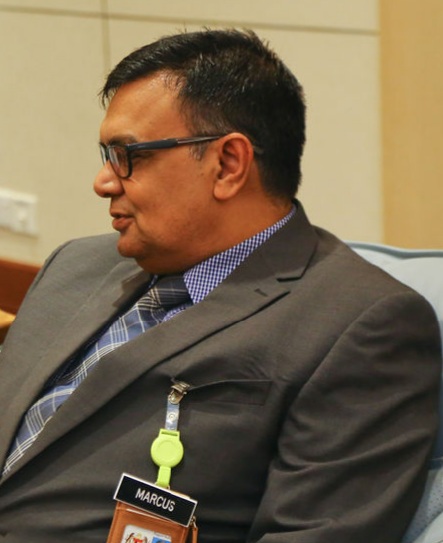
Yet the health ministry has got the biggest allocation ever of RM41.2 billion for next year. Much of it will go to pay for new medicine. RM766m is earmarked for expenditure to replace equipment in public hospitals that are beyond repair. But it is unclear whether there will be a new Linac and other equipment for HWKKS. Dr Netto has set a two-year time frame to acquire a positron emission tomography (PET) machine for better cancer detection. It has been long overdue. He says that 20 new cancer patients have to travel out of Sabah for PET scans every year. The nearest such facility is in Kuching, the capital of neighbouring Sarawak. This is to Sabah’s shame.
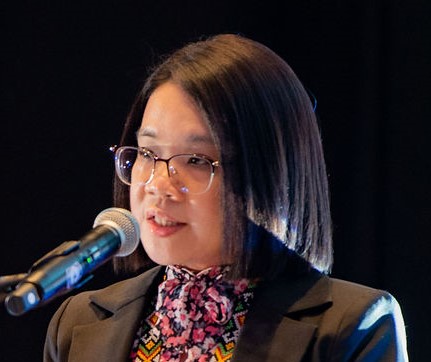
Without elaborating, Dr Flora Chong, who heads the hospital radiotherapy and oncology department, says cancer treatment at public hospitals has seen significant improvement. She points to the stereotactic radiosurgery which was offered by HWKKS last year. But why it has taken so long is anybody’s guess. It points to the shortage of skilled manpower to handle sophisticated machines and treatment.
Sabah has 12 oncologists, a doubling, which somewhat delights Dr Ros who seems quite happy with 24 public and eight private hospitals serving 3.6m people in Sabah, the size of Scotland. It sits on an area of 76,631 square km on the north-eastern tip of Borneo island. Sabah is short of 24 oncologists based on a ratio of 1:100,000. Two of the 12 oncologists serve in private hospitals.
But the introduction of stereotactic radiosurgery does not seem to have helped Sabah patients suffering late stage cancer. This week, a patient with 4th stage brain tumour has to be flown to Kuala Lumpur, courtesy of the Royal Malaysian Air Force, for treatment.
Obviously the state of cancer care in Sabah is far from satisfactory. Many of the hospitals do not have oncologists or doctors to treat cancer. Thus the government plans to bring cancer treatment to rural Sabah will not happen because of the sheer lack of oncologists, skilled oncological technicians and equipment. As of now, says Dr Chong, oncologists from Kota Kinabalu have to visit hospitals in Tawau, Sandakan, Keningau, Lahad Datu and Labuan to treat cancer patients every two months. Although smaller hospitals can treat patients with some cancer drugs and chemotherapy, those needing radiotherapy will be sent to the HWKKS cancer centre. Follow-up treatment is carried out by telephone, email and teleconference. This will not work for patients in rural Sabah where internet connectivity and telecommunication are poor or unheard off.

Not only are machines for cancer treatment getting old. Most of the drugs prescribed for cancer patients are more than 10 or 20 years old. But oncologists say more than three-quarters of cancers do not need new drugs to treat. The older drugs are just as effective if the cancers are discovered early. Also early cancers do not need drug treatment, they say. Surgery, radiotherapy and chemotherapy are enough. The problem is about two-thirds of cancer patients show up with 3rd or 4th stage cancer. Most of these patients live in poor villages where cancer awareness is low. Dr Netto says many of these patients end up in palliative care when their cancers become too difficult to treat. About 1.5m Sabahans live in rural areas.
And here is where newer drugs and therapies such as hormone therapy and immunotherapy figure strongly. Particularly immunotherapy which harnesses the immune system to destroy cancer cells. It has been hailed as a game changer in cancer treatment, prolonging the survival of patients. But their prohibitive cost means cancer patients will never get them at public hospitals. A dose of these drugs can cost anything from RM20,000 to more than a RM100,000. To many an oncologist in Sabah, this year’s Ascomos’ theme, “Scaling Greater Heights in Oncology” may sound hackneyed. Their practice of oncology has mostly been an uphill battle.

 Sabah Insights