
As prices skyrocket, Sabah aims to end Bernas’ rice monopoly
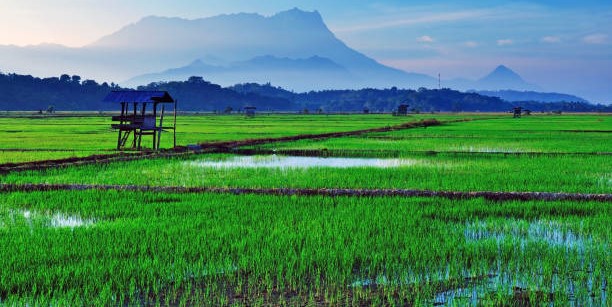
Rice isn’t only a staple of Sabah’s indigenous Kadazandusuns. It is sacred to them. Legends have it that its Bambarayon spirit has given them a lifeline. So in a sense, they should be self-sufficient in rice. A Kadazandusun family would have a paddy field and be confident of a good harvest that would give them rice to last for at least a year or until the next harvest. Surplus rice would be stockpiled or given to those who didn’t have any. Not anymore. Paddy acreage and rice production have shrunk so drastically that Sabah has to import almost all of its consumption.
Jeffrey Kitingan, the state agriculture minister, blamed it on the lack of machines to cultivate rice. Citing an example early this month, he said the rural Tambunan district, of which he is the assemblyman, has lost about half of its paddy fields because farmers don’t have machines to plough fields, sow seeds and harvest the crop. But that is only half the story.
Over the years, paddy fields have been turned into towns and housing estates as land for such development has become scarce and expensive. Owners happily sold their paddy fields for a hefty price as their children were no longer interested in growing rice. Being better educated, they joined the exodus to the cities in search of higher education, better jobs and careers. In Penampang, once Sabah’s rice bowl not far from Kota Kinabalu city centre, paddy fields are few and far between.
It used to be that rice cultivation was a year long ritualistic indulgence that culminated into a grand harvest festival at the end of May. It is thanksgiving to the paddy gods and spirits for a bountiful harvest. Whole villages would turn out in camaraderie to work in the fields. Before rice cultivation was mechanised in the early 1970s, the Kadazandusuns, who were traditionally rice farmers, would use buffaloes to plough their rice fields, painstakingly sow seeds and harvest the paddy with sickles. And Sabah achieved self-sufficiency in rice of about 50 percent. Today, it is a dangerously low 22 percent. This puts Sabah at the vagaries of imports as it has to depend on supplies from Thailand, Vietnam, China, Pakistan and India.

There has been hue and cry over rice prices that have almost risen by half amid a severe shortfall of local rice. Sabah’s monthly rice consumption is 23,000 tonnes but local rice production has fallen to about 1,400 tonnes – a 94 percent deficit -, according to Ab Alim Multazam, director of Sabah Padi and Rice Regulatory Board. This brings Padiberas Nasional Berhad (Bernas), the national rice board, into focus as it is accused of making money from rice imports by taking advantage of Sabah’s shortage. Bernas has a rice monopoly.
Mr Kitingan and other Sabah politicians have suggested reviving the Sabah Padi Board that was set up in 1965 but was wound-up in 1981 after running into debts. It mechanised paddy cultivation in Sabah. Ostensibly the Board would help Sabah’s long term rice cultivation programmes aimed at achieving 60 percent self-sufficiency in rice by 2030. But more telling is that it would quickly break Bernas’s monopoly on rice imports.

 Sabah Insights
1 thought on “The rice fiasco”