
Idyllic Semporna cashes in on the culture of stateless sea gypsies
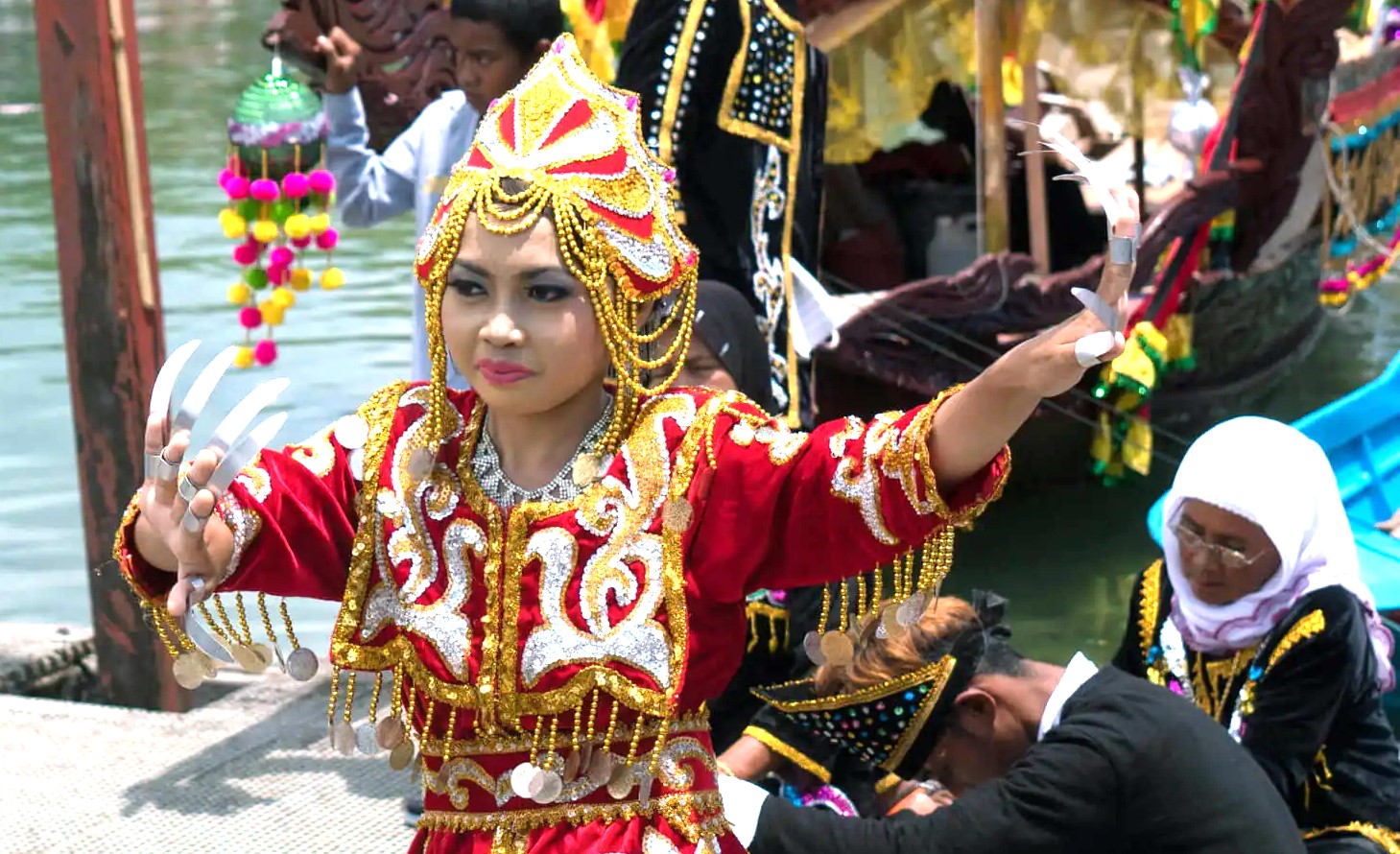
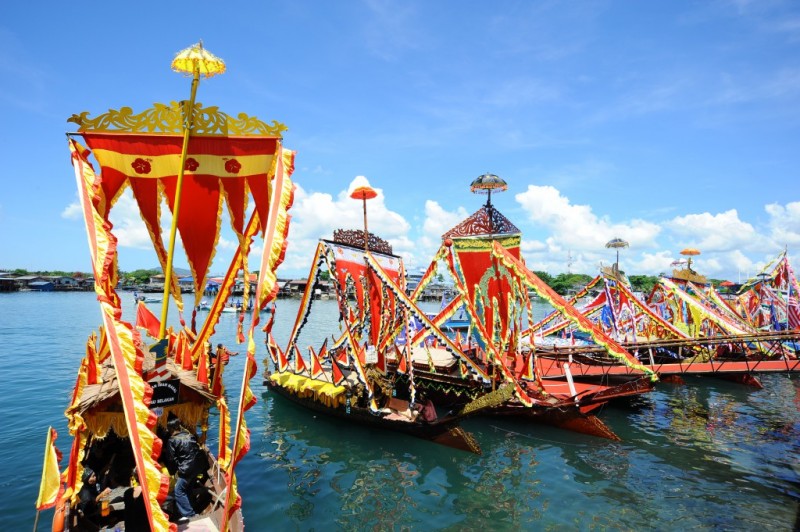
For 28 years Sabah has held the annual Regatta Lepa, a culturally colourful boat race of the Bajau Laut, the sea gypsies or nomads. They hailed from the Southern Philippines but have made the waters off the idyllic resort town of Semporna their home. Next month the regatta will be held from 17 to 19. And as Sabah cashes in on their culture, the Bajau Laut are resigned to their plight of a stateless people. Meanwhile local authorities are tasked to clean up the town, ensure that there’s enough water supply, no power cuts and enough rooms for about 50,000 visitors.

The Bajau Laut are an enigma. Descendants of 15th century Filipino seafarers who plied the Sulu Sea between the Southern Filipino island of Mindanao and Sabah’s eastern coast, they nevertheless claim affinity with Sabah. And their culture has become an integral part of the east Malaysian Borneo island state. “The Regatta Lepa is one of Sabah’s world-renowned heritage and attractions,” says Christina Liew, tourism, culture and environment minister, adding “it serves as a cultural link and fosters unity among our community.”
Most of the Bajau Laut are born in the state or, to be precise, in boats on Sabah waters off Semporna, the gateway to world-renowned diving sites such as Sipadan, Mabul and Kapalai. Many of them have never set foot on land and they carve out a living by selling fish, lobsters, sea urchins, other marine produce and handicraft from their boats to tourists and local people. Their life is confined to their lepas that have no electricity, television, computers and fridges. And they don’t have mobile phones.
There aren’t any official statistics on the Bajau Laut. But community leaders estimate there may be as many as 3,000 of them off the Semporna coast. Semporna has about 35,000 people, mostly Bajaus, Suluks and ethnic Chinese.
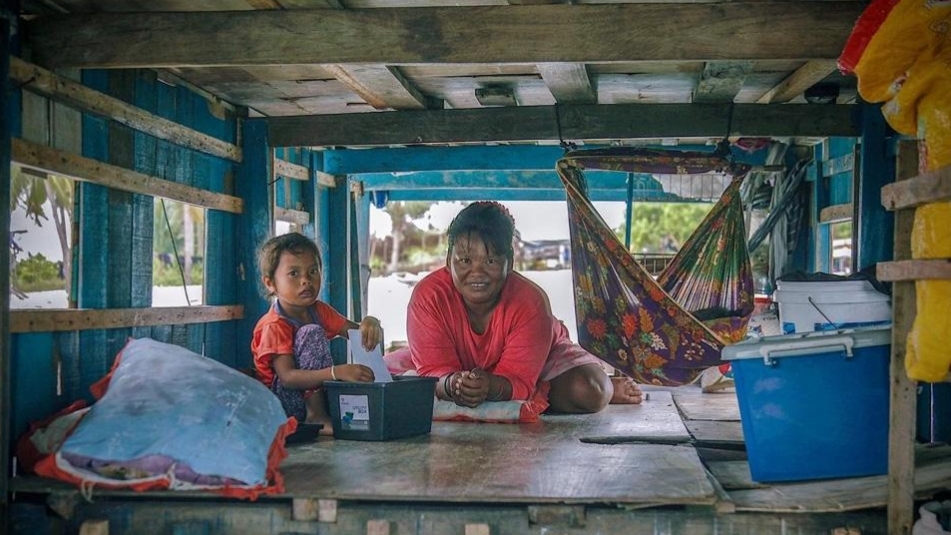
Malaysia has very strict citizenship laws that require at least one parent to be at least a permanent resident before their offsprings can be granted citizenship. Their inability to speak fluent Malay, the national language, is another setback. Thus the Bajau Laut remain in limbo despite the efforts of the Sabah government to help them with their citizenship application. Citizenship is a federal matter. The Bajau Laut don’t have any documents to prove their identity; not even a birth certificate. Without these they can’t go to school or find a job.
Still once a year the Bajau Laut wallow in pride displaying their artistic skills in colourful lepa races and parade. Their women take part in a beauty contest adorning their exquisite dresses.
Semporna is just as enigmatic as the Bajau Laut. It is famous with foreign and local tourists as a stopover to its surrounding islands and dive sites. About 4,000 tourists visited Semporna every day before the Covid-19 pandemic, according to T C Goh, president of the Federation of Chinese Associations in Malaysia. And tourists are now coming to Semporna by the thousands again since Sabah opened its borders last year. Goh says Semporna is now getting about 2,000 tourists a day. But its cleanliness and hygiene is wanting. Tourists complain of dirty hotel rooms. Some had food poisoning and diarrhoea. And the town stinks of rubbish so much so that Tiong King Sing, federal minister of tourism, arts and culture, warns the people of Semporna that his ministry would not hesitate to tell tourists to stay away from Semporna if they do not clean up their act.
For more than 10 years, people in Semporna have suffered water and electricity disruption. Many on the islands and in villages have to depend on rain water or water drawn from wells. In town, restaurants and hotels have to buy water from tankers on days when the taps run dry. Yet this has not deterred tourists from coming to Semporna.
Alesia Sion, the deputy permanent secretary of ministry of tourism, culture and environment, says the relevant authorities are cleaning up Semporna and they will ensure constant water supply during the festival, while Abdul Hussin Kiamsin, a community leader, says there will be enough rooms to accommodate the 50,000 visitors.

 Sabah Insights
1 thought on “A regatta overshadows the unending plight of Sabah’s boat people”